I want to tell you about two days in June, because they happened almost on top of each other, and almost nobody outside those two towns heard about either one.
On Monday, June 15, inside a classroom at a Buffalo high school, a student physically attacked a school staff member while other students stood around and filmed it. The man who was attacked had worked in that building for roughly 38 years. Think about that. Nearly four decades showing up for other people's children, and it ended with him on the floor and a phone camera in his face.
The next day, Tuesday, June 16, at an elementary school in Havre de Grace, Maryland, a child attacked two teachers with a weapon during afternoon dismissal. Both were stabbed. Both were taken to the hospital. Thankfully, both survived and were released, and no students were hurt. Staff and a school resource officer moved fast and kept it from becoming something far worse.
2 incidents. 2 states. 24 hours apart. And if you were not in Buffalo or Havre de Grace, you probably never saw a word about it.

Here is what I need you to understand: these were not freak events. When the president of the Buffalo teachers union was asked about the video, his response was not shock that it could happen. It was that it happens too often. Employees, he said, are assaulted throughout the year.
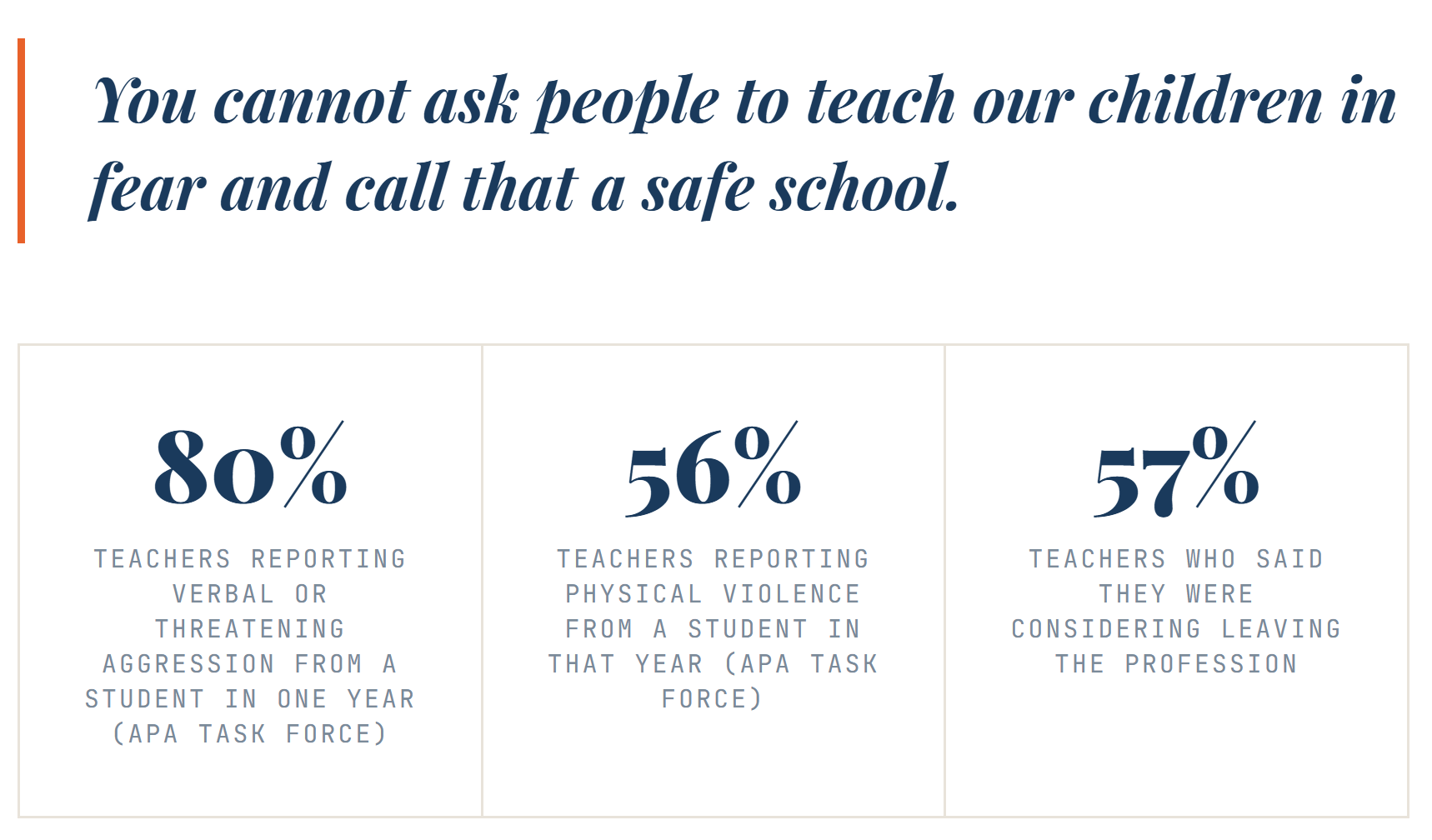
The data backs him up, and it is worse than most people think. In a national study led by the American Psychological Association's task force on violence against educators, 80% of teachers surveyed reported at least one incident of verbal or threatening aggression from a student in a single school year, and 56% reported physical violence from a student. More than half, 57%, said they were considering leaving the profession because of it.
The federal government's own numbers are more conservative but point the same direction. In the U.S. Department of Education's national teacher survey, 6% of public school teachers reported being threatened with injury by a student and 4% reported being physically attacked in a single year. And the group hit hardest was not high school teachers. It was elementary teachers, the people standing in front of our youngest children.
We spend a great deal of time in this newsletter talking about protecting students, and we should. But the adults we send into those buildings to protect our kids are getting hurt, and we have been strangely quiet about it.

Regular readers know where I always land. Reactive safety waits for the video to go viral and then suspends a student. Proactive safety asks a harder question: what were the warning signs, what supports were missing, and who was supposed to be watching?
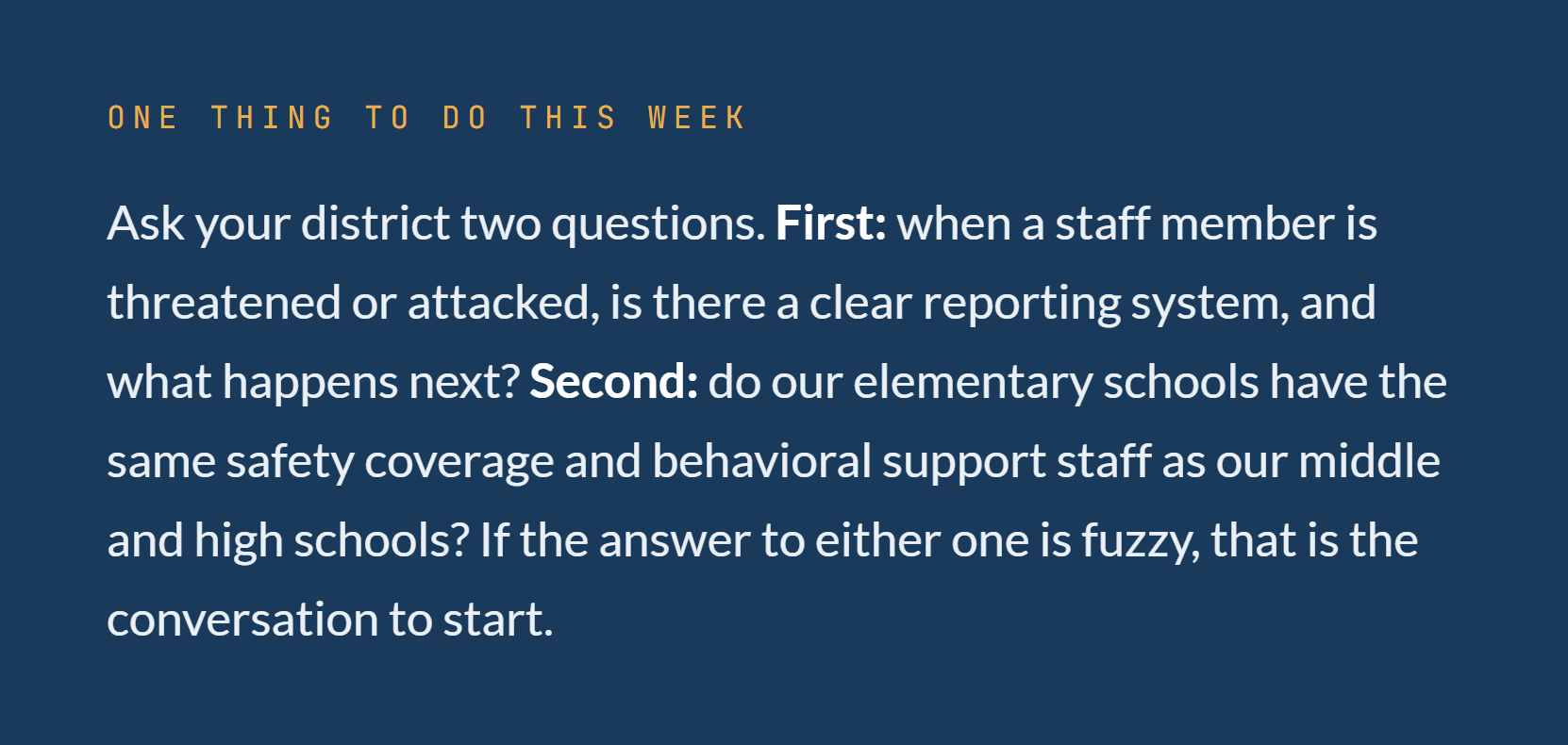
Havre de Grace is a painful example of the gap. After the stabbing, the county sheriff pointed out that for three years he had asked for funding to put a school resource officer in every elementary school, and for three years he had been turned down. In that county, middle and high schools each get their own officer. The elementary schools share one officer across several buildings. We decided, in advance, that the youngest children and the teachers who care for them were worth less coverage. Then we acted surprised when something happened at an elementary school.
Proactive means real threat assessment, so a child in crisis is identified and helped before an explosion, not punished after one. It means behavioral and mental health supports actually staffed, not listed on a website. It means a clear, safe way for a teacher to report a threat and know it will be taken seriously instead of being asked what they did to provoke it. And yes, it means staffing our elementary schools like we believe the people inside them matter.
See how school safety is tracked, school by school, where you live.
Two teachers stabbed. A thirty eight year veteran on the ground. Both in the same week, both nearly invisible. We can keep treating this as isolated, or we can start treating it as what it is.
For Alex. And for all of them.
Max Schachter