I have spent almost 8 years walking into schools and asking one hard question. Where are you vulnerable? We look at the front entrance, the locks, the cameras, the single point of entry, the visitor badges. That work matters and I will never stop pushing for it. But this week I read a feature in Bloomberg Businessweek, reported by Margi Murphy, that reminded me of something I need you to sit with. The most dangerous door in a child's life is not the one at the school. It is the one in their pocket.
The reporting is about a network called 764. If you have never heard that name, you are not alone. Most parents have not. That is exactly what makes it so dangerous.
If you have followed this letter, 764 is not new to you. I wrote a 2-part series on it this spring, and every word of it still stands. Part 1 explains how these predators hunt children inside the games and apps our kids already love. Part 2 lays out the warning signs, and exactly what to do if your child has already been contacted. If you have not read them, please do, and forward them to another parent today.
I am writing about it again because this week it landed on the cover of a national business magazine. The reporting confirms what the FBI has been telling me for a year. This is not shrinking. It is growing.
764 is not a gang in the way we usually picture one. It has no clubhouse and no single leader. It is a loose, global web of online predators who find children, earn their trust, and then turn that trust into a weapon. It began in 2021, named after the first three digits of a ZIP code in a small Texas town, built by a teenager during the isolation of the pandemic. It has since spread into nearly every part of the world.
Here is how it works, and I am going to say it plainly, because sanitizing it does not protect anyone. These predators meet kids where kids already are. On gaming platforms. On Discord. On Roblox. On the apps our children open a hundred times a day. They do not lead with threats. They lead with kindness. One of their own recruiting guides tells members to make a lonely child feel loved first, then to leverage that love into pressure. They coax out one private photo, and the moment it is sent, the trap closes. That single image becomes the blackmail that forces the next thing, and the next, each one more sadistic than the last. Carving a stranger's name into their own skin. Harming a family pet. Hurting a sibling. In the worst cases, ending their own life while others watch and cheer.
The FBI does not use soft language for this. The Director called it modern day terrorism in America. The Bureau is now investigating more than four hundred subjects tied to 764 and its offshoots, and every field office in the country is involved. The National Center for Missing and Exploited Children received more than three thousand reports of this kind of sadistic exploitation last year. That is a jump of one hundred and thirty percent in a single year.
The Last Time Stocks Were This Expensive Was December 1999.
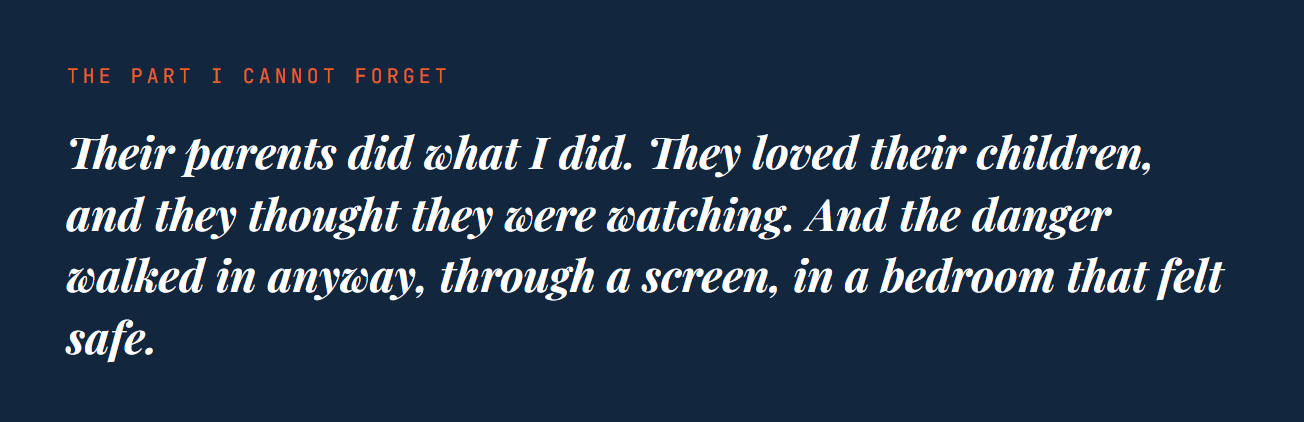
I want to be careful here, because these are not statistics to me. Behind every one of those numbers is a family. A 13 year old boy named Jay was pushed to end his life by a member of this network overseas, someone he believed was a friend, and his parents are now suing the platform they say enabled it. A girl named Penelope was ordered to carve four numbers into her chest and send proof that she had done it. Their parents did what I did. They loved their children, and they thought they were watching. And the danger walked in anyway, through a screen, in a bedroom that felt safe.
You might be asking why a school safety advocate is writing about an online network. Here is why. Investigators have now tied 764 and groups like it to real world violence, including attacks on schools. The teenager who opened fire in a Nashville high school cafeteria last year left behind writing that referenced this exact network. The line between what happens in the darkest corners of the internet and what happens in our hallways is thinner than we want to believe. The pipeline from online radicalization to real world violence is not a theory. It is showing up in case files.
This is the same lesson I have been living since February 14, 2018. We react. We wait for the tragedy, and then we scramble to understand it. Proactive safety means we learn the threat before it reaches our child, not after. And the uncomfortable truth is that most of us have no idea what our kids are actually doing online, on which apps, or with whom. We check the locks on the front door, then we hand them an unlocked door to the entire world and call it a phone.
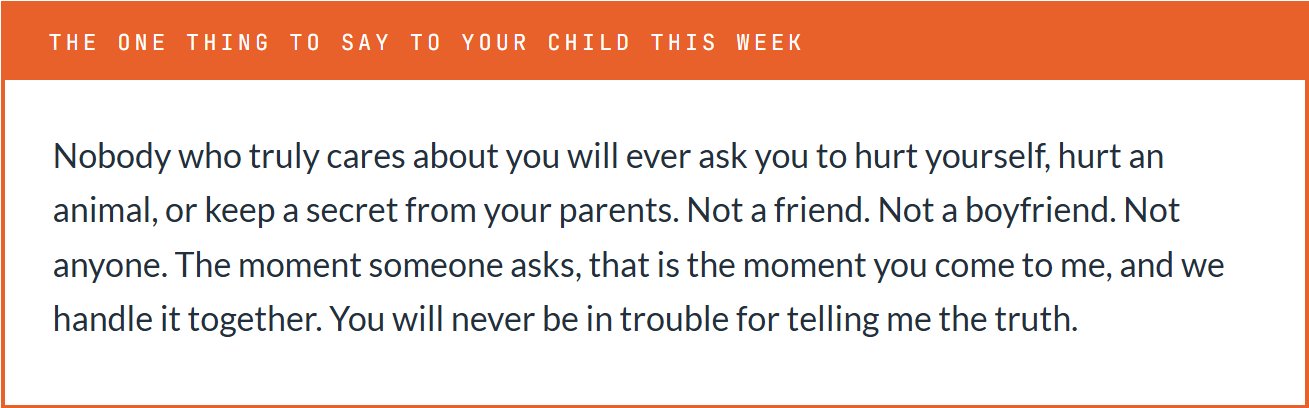
I am not telling you to take the phone away. I am telling you to walk through that door with them. Know the platforms they use. Understand that a stranger who becomes intensely kind very fast is a pattern, not a coincidence. And make sure your child knows, before anything ever happens, that if they are ever trapped or ashamed or afraid, they can come to you and you will not be angry. Predators survive on a child's silence. Your relationship is the thing that breaks it.
The full list of warning signs, and the exact steps to take if your child has already been contacted, are in part two of my spring series. Read it, save it, and know where it is before you ever need it.
Awareness is the first layer of prevention, and it costs nothing. Learn the name. Have the conversation. Guard the door that actually matters.
SEE THE FULL PICTURE OF SCHOOL SAFETY
The resources worth your follow and your time:
Allizandra Herberhold, LMSW · Seeking Safer Pathways Specializes in the true crime community and the warning signs of radicalization and exploitation in young people. Connect on LinkedIn · seekingsaferpathways.info
Federal Bureau of Investigation Official resources on 764 and nihilistic violent extremist groups, including an open letter written directly to parents, guardians, and caregivers. fbi.gov
U.S. Secret Service National Threat Assessment Center Free research, guides, and recurring virtual trainings open to anyone who wants to help prevent targeted violence. secretservice.gov/protection/ntac

For Alex. And for all of them.
Max Schachter