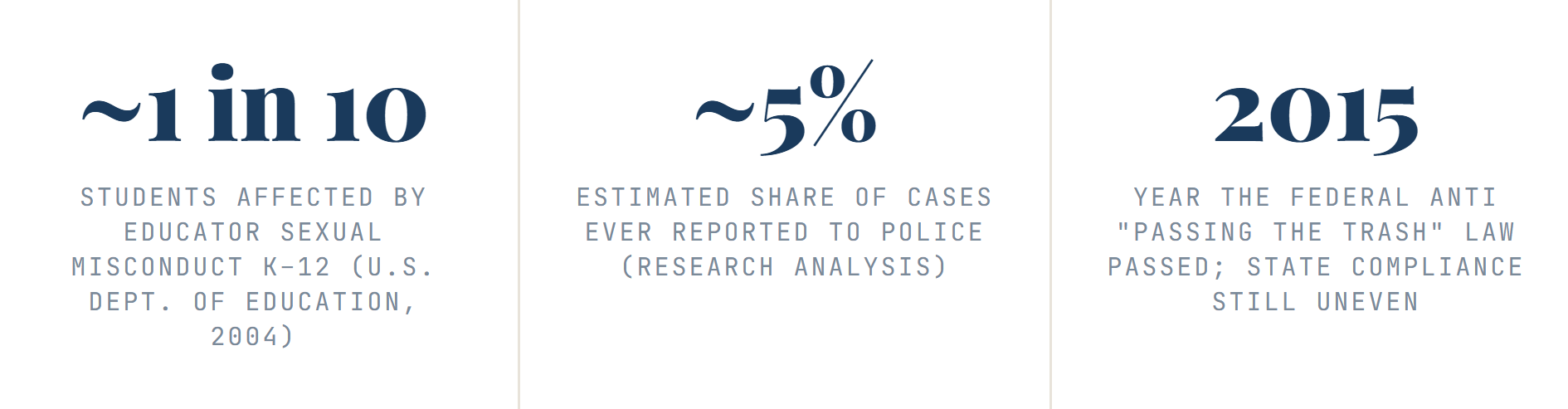
Nearly 1 in 10. Before you read another word, sit with that number, because it is about to get worse when you learn how long we have known it.
In 2004, the U.S. Department of Education commissioned a review of the research on sexual misconduct by school employees. The finding was that roughly 9.6% of students experience some form of sexual misconduct by a school employee at some point between kindergarten and 12th grade. That is nearly 1 in 10 children. Extrapolated across the country, it means millions of students.
That number is not new. It is old. And this month, when the Department of Education cited it again while announcing a national initiative, an official made the point that has stayed with me: in almost any other setting, a finding that 1 in 10 children was being harmed would trigger a national outcry. Here, it produced more than 20 years of mostly silence.

The most disturbing part is not that predators exist. It is how often the system moves them along instead of stopping them. There is a term for it that people inside education actually use: passing the trash.
Here is how it works. A school employee is credibly accused of sexual misconduct. Rather than investigate, report, and face the cost and the lawsuit and the bad headline, administrators quietly let the person resign. The record stays clean. Sometimes, unbelievably, the person is handed a positive reference on the way out. Then they are hired in the next district, with new children, and no one there has any idea.
This is not a theory. When the Government Accountability Office examined a set of these cases, it found officials allowing accused employees to resign to avoid discipline, and in several of those cases actually providing positive references for them. Researchers who study this estimate that only a tiny fraction of cases, as low as 5% by one analysis, are ever reported to police at all. A predator does not need to be clever when the institution is willing to hand them a clean slate.

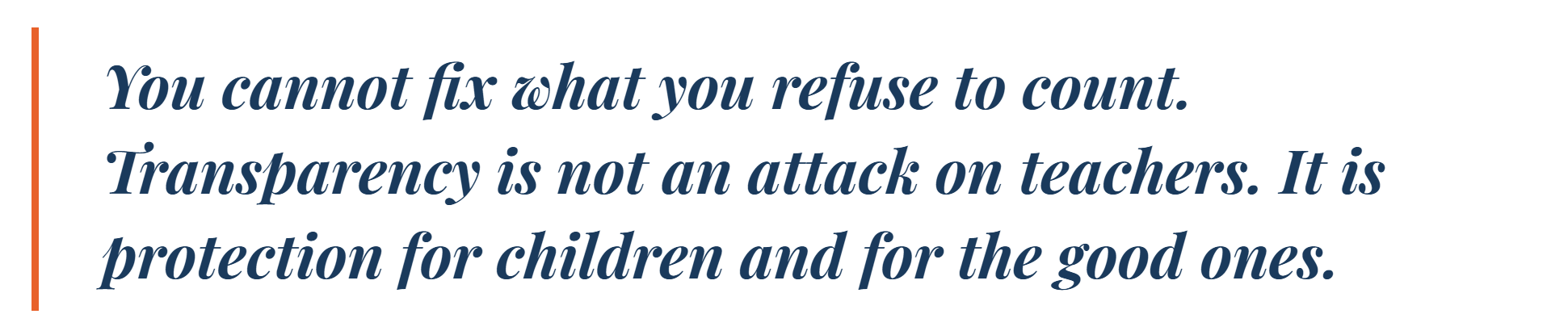
If you have followed our work on the dashboard, you already know my core belief: you cannot fix what you refuse to measure. This issue is the clearest example I have ever seen.
To this day, the federal government does not collect real, dedicated data on educator sexual abuse. Congress passed a provision back in 2015 meant to end passing the trash by barring federally funded schools from helping an abuser get their next job. It was the right idea. But a study of how states responded found that only a handful had fully complied, and dozens had no plan to act at all, some because they simply were not aware the requirement existed. A good law nobody enforces protects nobody.
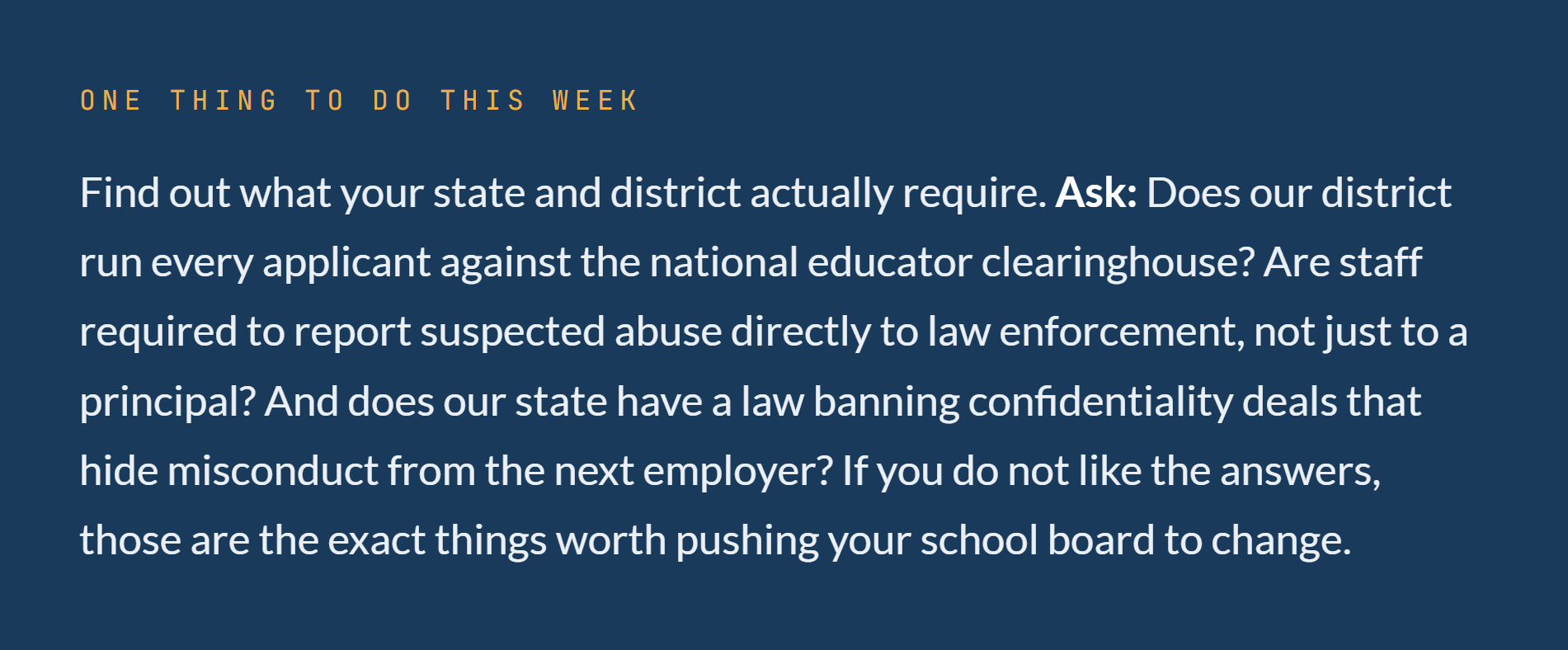
But here is the hopeful part, and it is real. When states decide to see the problem, they can act. Texas recently launched a public educator misconduct dashboard that breaks down cases by type, alongside a searchable Do Not Hire registry. California passed a law creating a statewide misconduct database and requiring boundary and grooming awareness training. Oklahoma now requires that abuse allegations go to law enforcement within 24 hours, before any internal school inquiry. And this month the Department of Education opened directed investigations into districts flagged for possibly mishandling staff misconduct. Notice that these moves are coming from red states and blue states alike. Protecting children was never supposed to be a partisan question.
Transparency is how we keep kids safe. See full picture where you live.
The abusers count on silence and a clean record. The single most powerful thing we can do is refuse to give them either one.
For Alex. And for all of them.
Max Schachter