When most of us picture bullying, we picture somewhere hidden. A corner of the playground. A bathroom. A group chat at midnight.
The federal government asks students every few years where it actually happens. The answer surprised me.
39%
of bullied students said it happened in a classroom. That makes the classroom the single most common place a child is bullied at school.
Source: NCES, 2022 School Crime Supplement
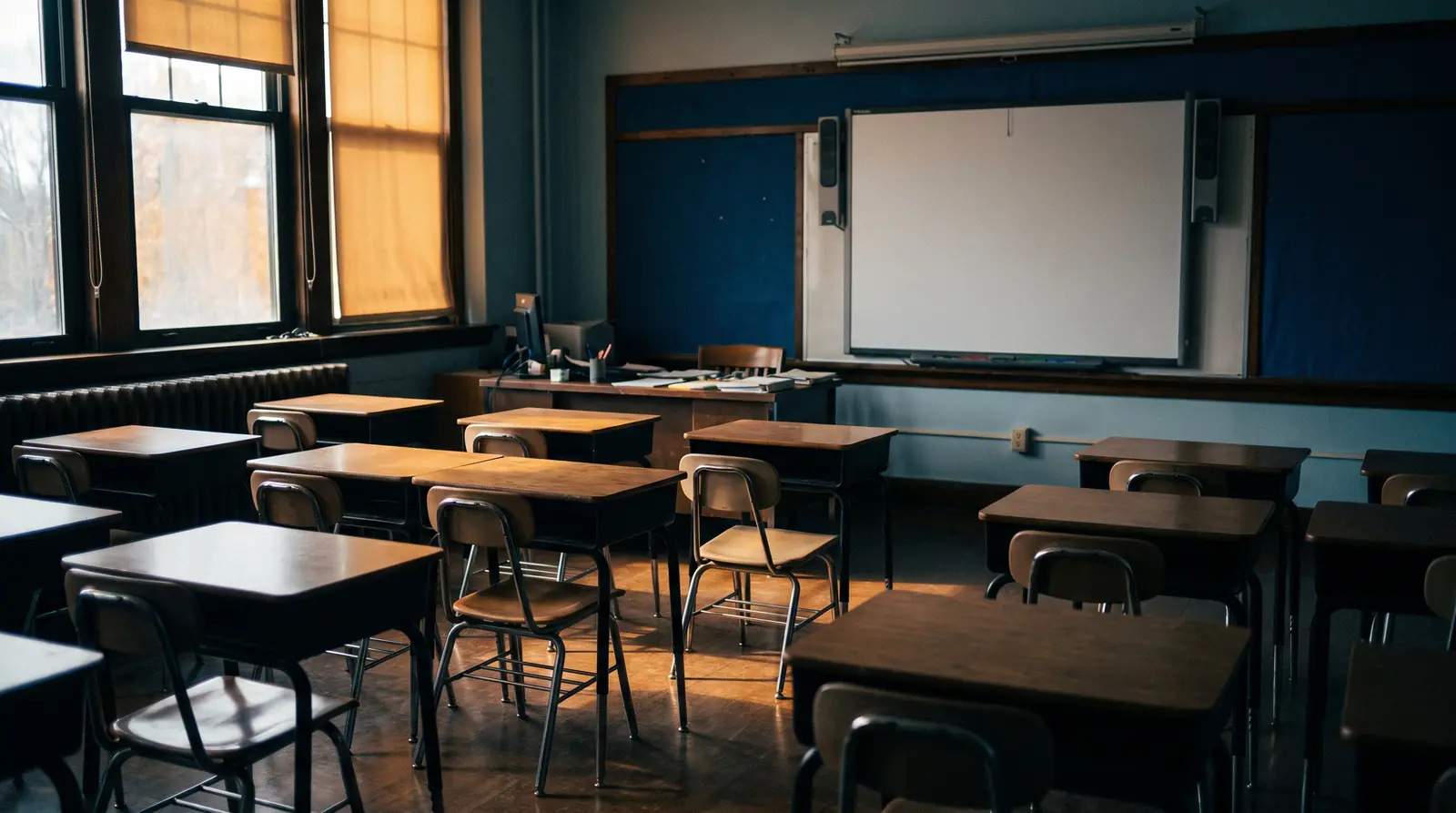
The room with the teacher in it. Then the hallway. Then the cafeteria. The places with the most eyes in the building.
October is National Bullying Prevention Month, and most of what you will read this month is about warning signs at home. Those matter, and we shared them last week. This piece is about everyone else in the room.
Where students say they were bullied
Share of bullied students, ages 12 to 18, who named each place. Students could name more than one.
Source: National Center for Education Statistics, Student Reports of Bullying, 2022 School Crime Supplement, Table 2.1
Somebody saw it
Researchers in Toronto once did something simple and powerful. They put cameras and microphones on school playgrounds and recorded what really happens during bullying.
Other children were watching in 88% of the episodes. They stepped in only 19% of the time. And when a child did step in, the bullying stopped within 10 seconds in 57% of those cases.
The bystander gap
What researchers recorded during bullying on school playgrounds.
Source: Hawkins, Pepler and Craig, "Naturalistic Observations of Peer Interventions in Bullying," Social Development, 2001. Grades 1 to 6, Toronto.
Read that again. In more than half the cases, 10 seconds of courage from one kid was enough.
Most never tell
Adults miss it for the same reason kids do. It happens fast, it looks like joking, and nobody wants to make it worse. The students living through it rarely help us see it.
Did they tell an adult at school?
Bullied students, ages 12 to 18. Each square is 1% of them.
Source: NCES, 2022 School Crime Supplement, Table 2.7
So the adult in the room cannot wait to be told. More often than not, the report never comes.
It peaks early
If you want to know where to put your effort, look at the grades. Bullying is highest in 6th grade, the year most kids walk into a new, bigger building and try to figure out where they fit. It falls by more than half by 11th grade.
Students bullied at school, by grade
Percent of students in each grade who said they were bullied during the school year.
Source: NCES, Condition of Education, Student Bullying indicator, 2021 to 2022 school year
Middle school is where the habits form, for the kids doing the bullying, the kids on the receiving end, and the kids watching. It is the best place we have to teach all three what to do.
Why this is a safety issue
I have spent 8 years studying how school attacks happen and how they get stopped. Bullying keeps showing up in that work, and I want to be careful about how I say this.
When the Secret Service studied 41 attacks on K-12 schools, it found that most of the attackers had been bullied by classmates. For more than half of them, it was a pattern that lasted weeks, months or years. And the bullying was often observed by others.
That does not mean a bullied child is dangerous. The overwhelming majority of kids who are bullied never hurt anyone. What it means is that bullying is a sign of pain, and pain that goes on for months with an audience watching is pain that somebody could have interrupted.
Where my own argument is weak
The national numbers come from students describing their own experiences, and the newest federal data is from the 2021 to 2022 school year. The playground study is more than 20 years old, it was done with elementary students in one city, and it is a small sample. I use it because it shows something a survey cannot: what actually happens in the moment, and who is standing there when it does.
There is also good news hiding in this data. In 2010 to 2011, 28% of students said they were bullied. By 2021 to 2022, that number was 19%. Schools have gotten better at this. We can get better still.
What actually works
Train the adults where it happens. If the classroom and the hallway are the top 2 places, teachers and hall staff are the front line. They need to know what bullying looks like when it is dressed up as a joke, and they need permission to stop class and deal with it.
Teach kids exactly what to do in those 10 seconds. Telling a child to "be an upstander" is too vague. Give them moves they can actually make: don't laugh, walk over and stand with the kid being targeted, say "come on, let's go," and tell an adult afterward. Small actions count.
Give students a way to report that does not feel like snitching. Anonymous reporting systems like Sandy Hook Promise's Say Something exist for exactly this. Make sure every student knows the one in your district, and that someone answers it.
Put the most effort into 6th grade. Orientation, mentoring by older students and extra adult presence in the first weeks of middle school put the effort where the numbers are highest.
If you are a parent, skip "are you being bullied?" Ask this instead: "Have you seen anyone get picked on this week? What did people do?" It is often easier for a child to talk about someone else, and it opens the door to what they would do next time. If you work in a school, ask your staff one question at your next meeting: "Where in our building does this happen?" They already know. Put an adult there.
See what your district reports about bullying. Our School Safety Dashboard shows how many bullying incidents your district officially reported, how that number has changed since 2018 to 2019, and how it compares with the state average.
- Open the dashboard and search for your school or district.
- Go to Safety Incidents. You'll see every incident type the district reported, from fighting to weapons.
- Click Bullying. The charts switch to bullying only: incidents this school year, the change from last year, and the trend against the state average.
- Use the link under the chart for bullying prevention resources you can share with your school.
The dashboard counts incidents schools formally reported. National surveys capture what students experience. The two will never match, and that gap is what this article is about: most bullying is never reported, so every report matters.
For Alex. And for all of them.
Max Schachter
If a child needs help
If a young person is struggling: call or text 988, the Suicide and Crisis Lifeline.
Anonymous tips for students and adults: Sandy Hook Promise Say Something, 1-844-572-9669
Warning signs and how to talk with your child: StopBullying.gov
Immediate danger: call 911.
Data: National Center for Education Statistics, Hawkins, Pepler and Craig, and the U.S. Secret Service. Learn more at schoolsafetydashboard.org.